


Emotions vs. Feelings: What’s the Difference?
-Elda-Rosa Coulthrust, PsyD
Emotions vs. Feelings: What’s the Difference? Well, let’s clear something up—because this is one of those things people think they understand, but don’t always fully grasp.
Emotions and feelings are not the same thing.
We use them like they are, but they play two very different roles in how we experience life… and how we cope with it.
At the most basic level, emotions happen in the body, and feelings are the meaning we make of those emotions.
Before you even have time to think, your body reacts. Your chest tightens, your heart starts racing, your stomach drops. That’s not overthinking—that’s your nervous system doing exactly what it’s designed to do. Emotions are fast, automatic, and outside of your control.
They just show up.
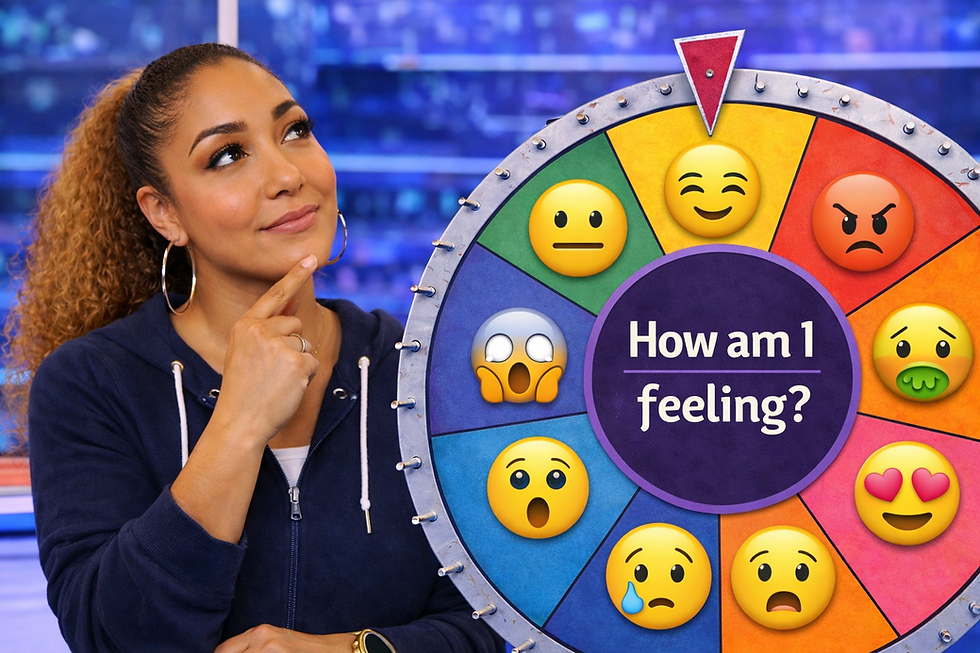
Fear, anger, sadness, joy, disgust, surprise—those are core human responses. You don’t choose them, and you don’t have to justify them. They happen.
But then something else happens...
Your mind steps in. And that’s where feelings begin.
Feelings are shaped by how you interpret what’s happening inside of you. So it’s not just “I feel sad.” It becomes “I feel abandoned,” or “I feel like I’m not enough,” or “I feel like nobody cares.” The emotion might be the same, but the meaning attached to it can be completely different.
And that meaning? It doesn’t come out of nowhere. It’s built from your experiences, your relationships, your history—everything you’ve been through.
This is where things start to matter.
Because most people aren’t overwhelmed by emotions alone. They’re overwhelmed by what those emotions mean to them.
It’s not just anxiety—it’s “I’m not safe.”It’s not just sadness—it’s “I’ve lost something I can’t get back.”It’s not just anger—it’s “I’ve been hurt or disrespected.”
That’s a different level.
And when that meaning gets heavy, people don’t just sit with it. They look for relief. Quickly.
If you don’t slow this process down, everything blends together. It just becomes “I feel bad” or “something’s off,” and when you can’t name what’s happening, you can’t work with it. So the natural response is to avoid it, numb it, or escape it—not because you’re weak, but because you don’t have language for it.
But here’s where the shift happens.
When you pause and separate the two—what your body is feeling and what your mind is saying—you create space.
You might notice, “My chest feels tight… this might be anxiety.” And then, “The thought I’m having is that I’m losing control.”
Now you’re not just reacting. You’re understanding.
And that space? That’s where your power is.
Because instead of being pulled into the experience, you can start to work with it. You can question it. You can respond to it differently.
That’s what emotional regulation actually looks like. Not shutting emotions down, not pretending they’re not there—but understanding them well enough that they don’t run the show.
So no, you don’t need to stop having emotions. That’s not the goal.
The goal is to understand what’s happening in your body and what meaning you’re attaching to it.
Because once you can say, “This is what I’m feeling, and this is what I’m telling myself about it,” you’re no longer overwhelmed by it.
You’re in conversation with it.
And that’s where real change begins.
Comments